Exhibition guide
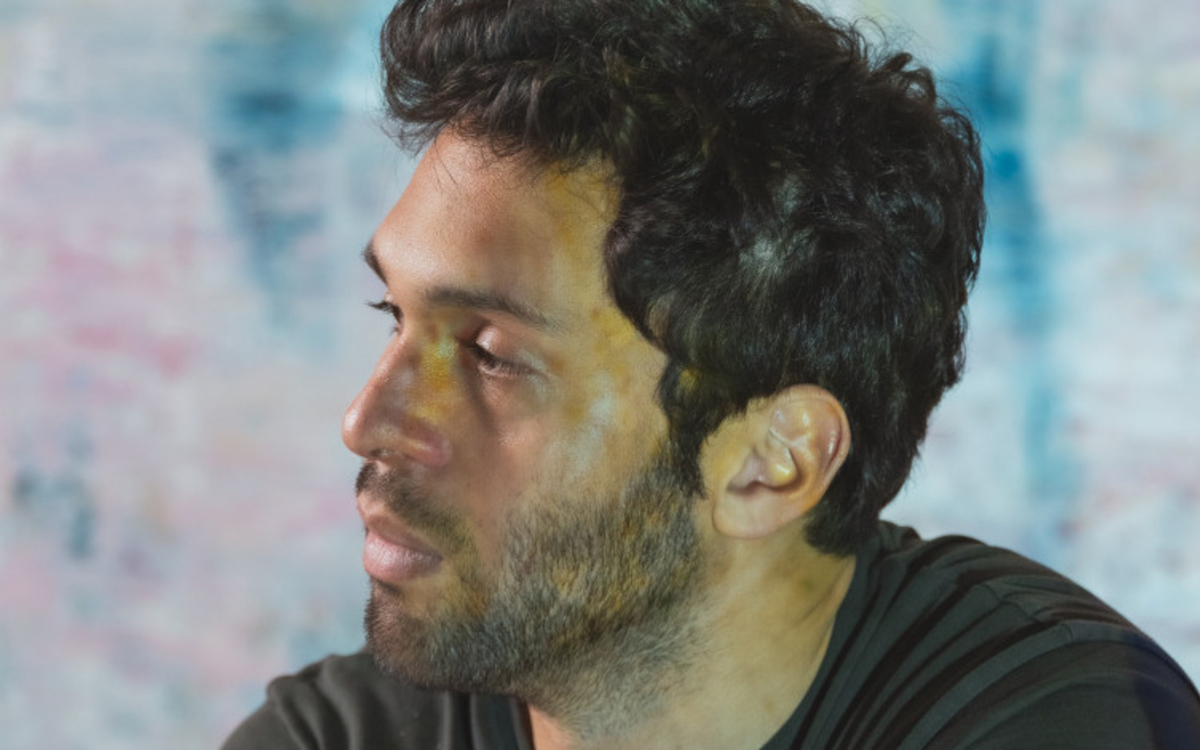
Alexandre Lenoir, born in 1992, mainly paints landscapes crossed by often ghostly characters, indifferent to the viewer. His paintings are executed from photographs that he chooses as memories of happy moments although dominated by an imperious nature to which he leaves an element of arbitrariness. Rather than faithfully representing nature, he seeks an alchemy which gives rise to works appearing to have been created spontaneously, almost without intervention from the artist. From these familiar scenes bathed in dazzling light emanates a surprising melancholy. On the occasion of the 16th contemporary counterpoint at the Orangerie museum, Alexandre Lenoir presents four new paintings.
Visit details
- Dates: From Wednesday March 25, 2026 to Monday August 24, 2026: Monday, Wednesday, Thursday, Friday, Saturday, Sunday from 9:00 a.m. to 6:00 p.m.
- Venue: Musée de l'Orangerie, Jardin des Tuileries, Paris
- Price: De 0 à 12,50 euros.
- Audience: Tout public.
- Source: Event page
About the exhibition
Then came the tapes, which were a way of preparing the ground for my washes of paint which I passed sideways on the canvas like a printer. » (Claude Monet quoted by Roger Marx, “Les Nymphéas de M. Claude Monet”, Gazette des beaux-arts , June 1909).
“When I rediscovered the Nymphéas ,” explains Lenoir, “I was struck by the way in which the water moved to the rhythm of the changing light in the exhibition rooms. It’s admirable to see, but it’s crazy to want to do that. At the end, when I removed the tape, I saw an image as if I had dreamed it, whose architecture and frames were originally present but inside which the painting took its full place. Indeed, the material of the canvases was such that the light sometimes caught on and also escaped.Well, I always tackle these things! Lenoir works from instructions that he gives to himself or to non-painter assistants, on images transformed by time, both the time elapsed between the shooting and the painting and that necessary for its slow creation. » (Letter cited in Gustave Geffroy, Monet, sa vie, son oeuvre [1924], Paris, Macula, 1980, p. 30).
Alexandre Lenoir experiments with the tension between assertive realism and creative processes that are as elaborate as they are experimental. Subsequently, I developed a very intimate relationship with this translational method which leads me to mask, cover and then discover. He proceeds with innumerable layers of paint, from the lightest to the darkest, placed on a multitude of small pieces of tape which mask then release the canvas, translating without “romantic” effects the projected image from which he paints.
Alexandre Lenoir: “It started with a canvas entitled The Cévennes, where to represent the surface of the water and its reflections, I had to find a way to apply the fewest brush strokes He works on "the action of seeing" in relation to the gesture which will create the image, the gesture of the water, that of the tree organizing a sort of ecosystem comparable to that desired by Claude Monet inventing the great decorations: "The temptation came to me to use this theme of Water Lilies for the decoration of a living room: transported along the walls, enveloping all the walls of its unit, it would have provided the illusion of a In short, it is a form of revelation which can evoke revelation in photography. possible. everything without end, of a wave without horizon and without shore. This allows me to leave a space of freedom to the spectator who looks at the canvas at the end, because I do not want to be the only one to impose the image on him."
In this the painter's ambition joins that of Monet to work on perception, the invisible: "I have taken up again things impossible to do, wrote Monet to Gustave Geffroy on June 22, 1890, water with grass waving in the background [...]