Exhibition guide
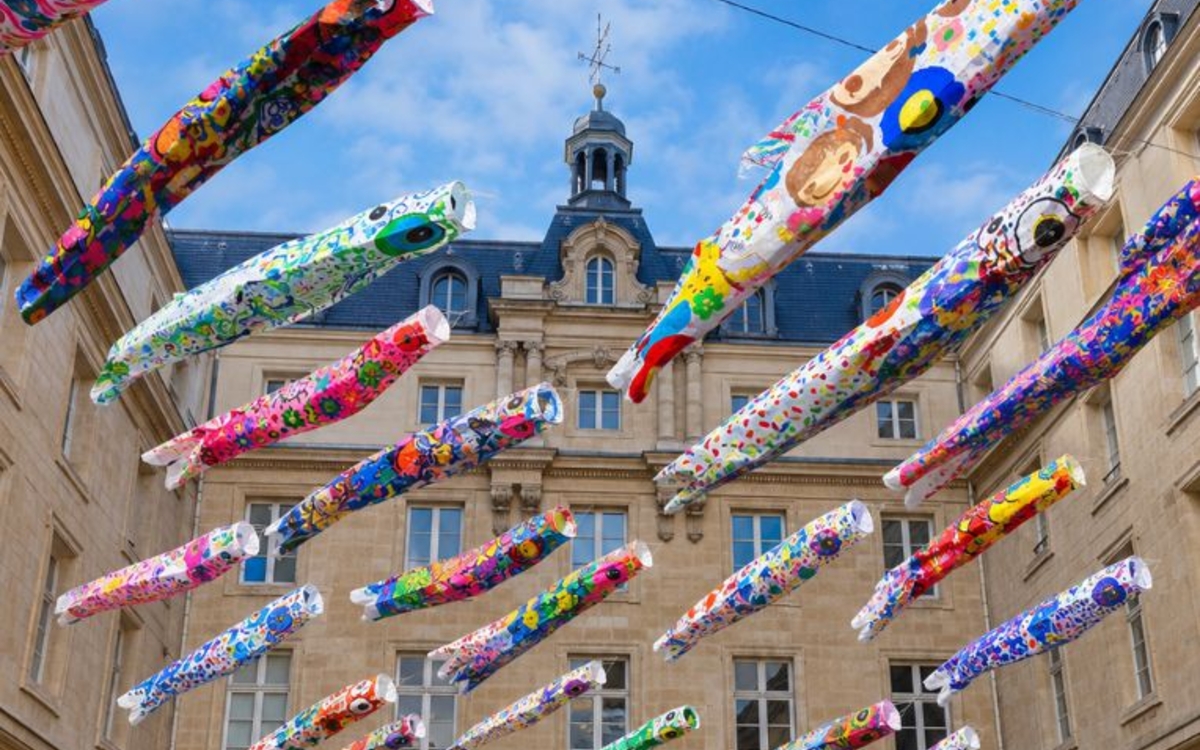
The Genki-nobori, windsocks imagined by the Japanese artist Susumu Shingu after the Tōhoku earthquake and tsunami in 2011, take over the main courtyard of the Hôtel de la Marine.
Visit details
- Dates: From Friday June 26, 2026 to Monday August 24, 2026:
- Venue: Hôtel de la Marine, 2 place de la Concorde, Paris
- Price: free
- Audience: All audiences
- Source: Event page
About the exhibition
the imaginations. This founding experience gradually led him to develop a sculptural work centered on the invisible energies of nature - wind, water, light and even gravity.
Over the years, he built a unique artistic language, at the crossroads of art, engineering and the contemplation of nature. Thanks to the support of the Jeanne Bucher Jaeger gallery, which represents the artist, La Source Garouste is developing this project as part of its 2026 inter-site project.
Between February and May 2026, around a hundred children in situations of social, educational or family fragility participate in creative workshops led by 10 artists in the different structures of the network. His moving sculptures, often monumental, dialogue with their environment and evolve according to natural elements.
His work has been presented in numerous museums, institutions and public spaces around the world and has given rise to collaborations with major figures in architecture, design and contemporary creation such as Renzo Piano, Tadao Ando or Issey Miyake.
La Source GarousteLa Source Garouste is a PresentationThe Genki-nobori take over the main courtyard of the Hôtel de la Marine. association with a social and educational vocationTogether, they designed 100 Genki-nobori through a collective experience combining drawing, painting, writing and plastic experimentation.
Through this project, La Source Garouste pursues its mission: to offer children and young people creative spaces where they can experiment, cooperate, develop their confidence and reveal their abilities in contact with professional artists.
Susumu ShinguSusumu Shingu began as a painter in Japan then in Rome Imagined by the Japanese artist Susumu Shingu after the Tōhoku earthquake and tsunami in 2011, then created by children and young people accompanied by La Source Garouste, these works carried by the wind celebrate creativity and resilience.
Carried by air currents, these long moving works - the Genki-nobori - will have been imagined and created by around a hundred children and young people accompanied by La Source Garouste in in the 1960s, deeply inspired by Renaissance artists like Leonardo da Vinci and his approach combining art, science and observation of the world. the 10 sites of its national network.
Inspired by traditional Japanese windsocks in the shape of fish, the Genki-nobori were born in Japan under the leadership of the artist Susumu Shingu after the Töhoku earthquake and tsunami in 2011.
Conceived as messages of hope entrusted to the wind, they carry a profoundly humanist vision of art: a creation capable of connecting beings, territories and His discovery of movement was born almost by chance, when one of his paintings hanging from a tree began to move under the effect of the wind.