Exhibition guide
First Anahita Prize awarded by the Keshavarzian Gallery and the Gondishapour Association: Touraj Vand exhibits “Today’s Heroes” from July 2 to 12, 2026.
Visit details
- Dates: From Thursday July 2, 2026 to Sunday July 12, 2026: Tuesday, Wednesday, Thursday, Friday, Saturday from 12:00 p.m. to 7:00 p.m.
- Venue: Galerie Keshavarzian, 23, rue de Miromesnil, Paris
- Price: free
- Audience: All audiences
- Source: Event page
About the exhibition
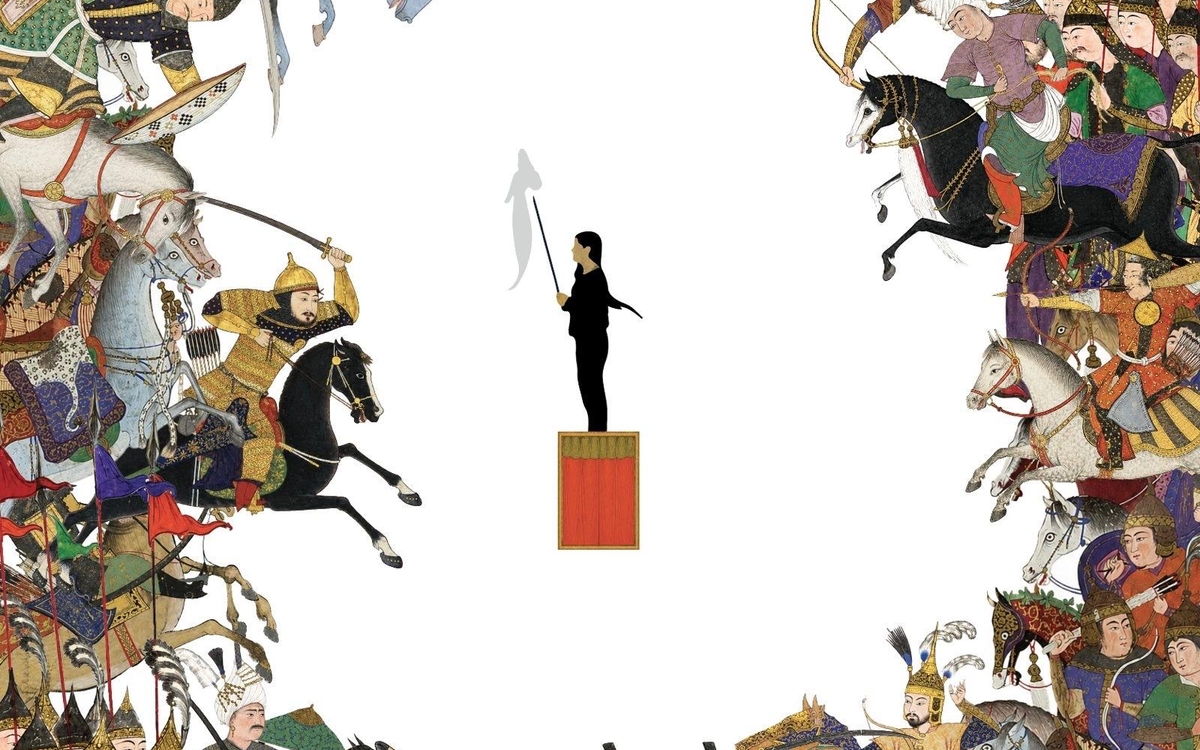
From July 2 to 12, 2026, the Keshavarzian Gallery presents Today's Heroes, a solo exhibition by Touraj Vand, winner of the first edition of the Anahita Prize. Awarded jointly by the gallery and the Gondishapour Association, this annual prize recognizes a figure of contemporary creation whose work extends Iranian cultural heritage. The artist displays a series of works where the illumination of Persian workshops opens, in its center, to a silhouette of today: a way, without manifesto, of inscribing the living memory of contemporary Iran in a millennial line.
Opening: Thursday July 2, 2026 from 6:30 p.m., in the presence of the artist. Free entry, Tuesday to Saturday, from 12 p.m. to 7 p.m.
The exhibition
On the periphery of the composition, the horsemen, the armor and the gold of an illumination inherited from the Safavid workshops. In the center, a silhouette of today. Between the two, a blank which is not a void. Touraj Vand does not cite the Persian miniature: he listens to it. For several years, he has been working to open up, in old illumination, a space that the painters had not foreseen and which was nevertheless waiting for them. Neither rewriting nor updating the heritage. A threshold.
Riders, demons, prancing horses, gold and pigments remain intact, pushed to the margin, in a circle or crown around a clear focus. The center, traditional place of the hero, of combat, of the throne or of the garden, has become liberated. A silhouette of today stands there. Alone, alive, she fights nothing. It is there.
Two eras stand close to each other, without touching, and each, from its shore, ends up recognizing the other. Yesterday's illumination becomes the setting for a contemporary presence. The silhouette of today becomes, without noise, the mythical figure of tomorrow. None prevails over the other.
This dialogue also runs through, more discreetly, the last Iranian decade. The artist is not writing a manifesto: he places an additional layer on the illumination to make room, at the center of the decor, for the ordinary heroines and heroes of today. Those whom ancient manuscripts had not painted, but who, in recent chapters of Iranian history, have held with their bare hands the gestures of everyday life, dignity and memory. Today's Heroes is not a political palimpsest: it is a resonance. Current events are placed there in a much older bed, and are inscribed there, in turn, in an age-old line.
In certain compositions, the silhouette carries a flame. It's not a weapon, it's a night light. What it protects, we can guess: a memory to be transmitted, as names, stories, images have always been transmitted. The series says this without saying it: that a legacy survives through the tiny gesture of those who, since their own time, keep its flame alive.
Today's Heroes extends Iranian Figures and is part of