Exhibition guide
The Ateliers-musée Chana Orloff presents an exhibition dedicated to the way the artist went through and represented the conflicts of the 20th century. Entitled War and Peace, this exhibition explores an essential but still unknown theme of Chana Orloff's work: his way of confronting, through sculpture, the violence of history.
Visit details
- Dates: From Friday 13 February 2026 to Sunday 28 June 2026 :
- Venue: Ateliers-musée Chana Orloff, 7 bis, Villa Seurat, Paris
- Price: De 0 à 10 euros.
- Audience: All audiences
- Source: Event page
About the exhibition
From the first pieces made during the First World War to the monuments created after the founding of the State of Israel, the exhibition traces more than half a century of creation marked by the trials and upheavals of the world.
Our era resonates strangely with the life of Chana Orloff: Ukraine, Israel, Europe, the sound of boots, massacres... Like us, it has experienced uncertainty, anxiety, fear, but also hope. Chana went through troubled times that deeply marked her: the death of her husband, poet Ary Justman in 1919; the suicide of his friend Georges Kars in 1945; knowledge of the Shoah; Arab-Israeli wars, a source of concern for his family and friends living in Israel.
However, serenity and hope have also marked his existence: his son Didi (Elie), his family, his career as an accomplished artist, and the creation of the State of Israel, all of which are luminous landmarks in his life. For her, sculpture was a language, a means of translating and transmitting her emotions.
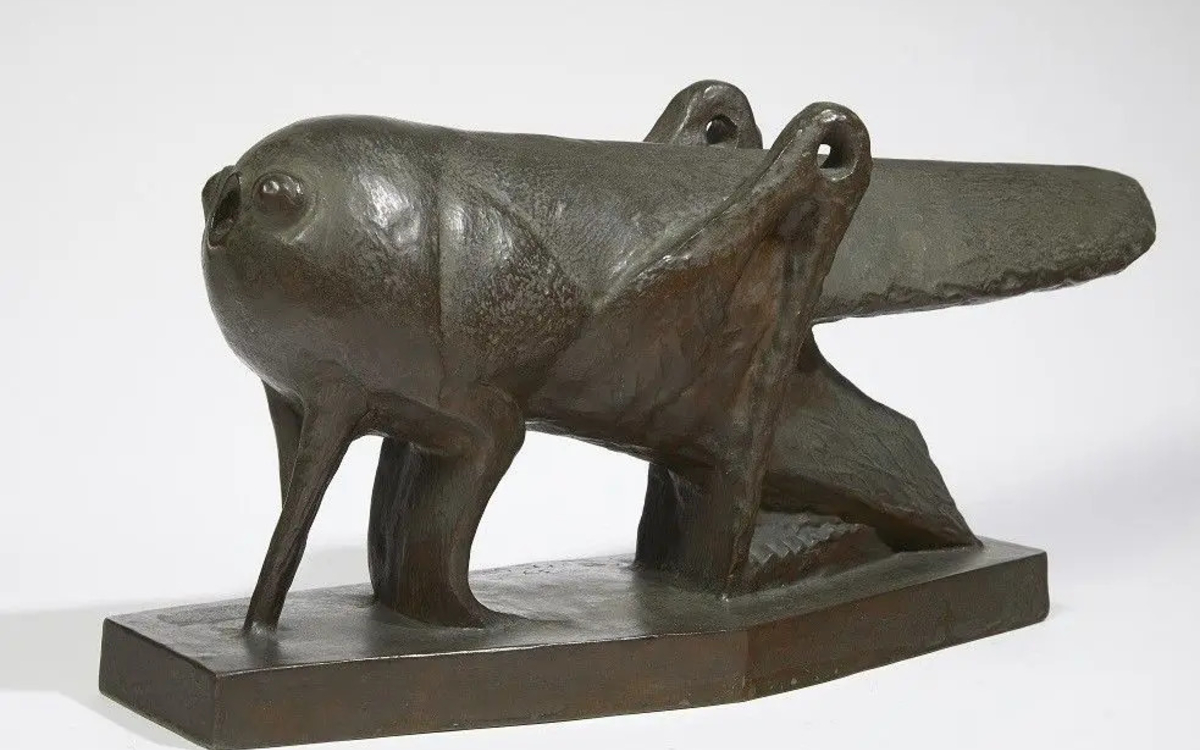
Many of her drawings and sculptures explore the themes of war and peace, as evidenced by her iconic work, War and Peace. The exhibition brings together a collection of works rarely presented, including sculptures, preparatory drawings and engravings. The mezzanine of the workshop is specially redeveloped to accommodate a journey built around three major sequences:
1914 – 1918: AnxietyFirst upheavals
The beginnings of Chana Orloff in Paris, at the time of war, and his first works marked by violence of times.
1939 – 1945: FearExil and reconstruction
Works related to the forced departure in Switzerland, the plundering of the Villa Seurat workshop and the resumption of work after the Liberation.
Afterwar: HopeMemory and engagement
The pursuit of a career between Paris and Israel, punctuated by public orders, monuments and sculptures where the desire for peace is affirmed