Exhibition guide
The Paris Museum of Modern Art presents for the first time in a French museum an exhibition dedicated to three Estonian artists whose work extends from the mid-20th century to the present day: Olga Terri (1916 – 2011), Anu Põder (1947 – 2013) and Kris Lemsalu (born 1985).
Visit details
- Dates: From Friday April 3, 2026 to Sunday July 19, 2026: Tuesday, Wednesday, Thursday, Friday, Saturday, Sunday from 10:00 a.m. to 6:00 p.m.
- Venue: Musée d'Art Moderne de Paris, 11, avenue du Président Wilson, PARIS
- Price: free
- Audience: All audiences
- Source: Event page
About the exhibition
The exhibition highlights the richness and vitality of the Estonian art scene through the eyes of these three artists from different generations. Each in their own way, they reflect a moment in the creation of this country with a history as fascinating as it is tormented.
Marked by its tension between the European and Russian spheres of influence, Estonia has managed to preserve an original, abundant and dynamic culture, from which the works presented arise.
The treatment of the human body acts as a common thread between the work of the three creative artists: a body sometimes abandoned, fragmented, augmented, transformed, exuberant or combative.
Anu Põder, central artist of the exhibition (1947 – 2013)
Anu Põder is one of the great rediscoveries in the history of art in recent years. Through around fifteen works, the exhibition unfolds the singular universe of this artist whose practice developed away from the academic constraints of her time. The materials used by Anu Põder reflect the precariousness of his condition during the Soviet era, as much as they reveal the upheavals of Estonian society upon the country's independence (burlap, plastic, soap, aluminum foil, etc.). The artist's body is often present in the hollow in her vulnerable, fragile sculptures, which refuse to be confined to traditional modes of representation.
Olga Terri, post-war painting (1916 - 2011)
A room brings together a series of portraits created between 1945 and 1950 by Olga Terri. It bears witness to the personal and collective horrors suffered during this immediate post-war period, as the Nazi occupation gave way to the Soviet occupation. A melancholic feeling emerges from his mute characters painted in muted colors, their loose positions expressing an imminent wavering.
Kris Lemsalu, a contemporary vision (born in 1985)
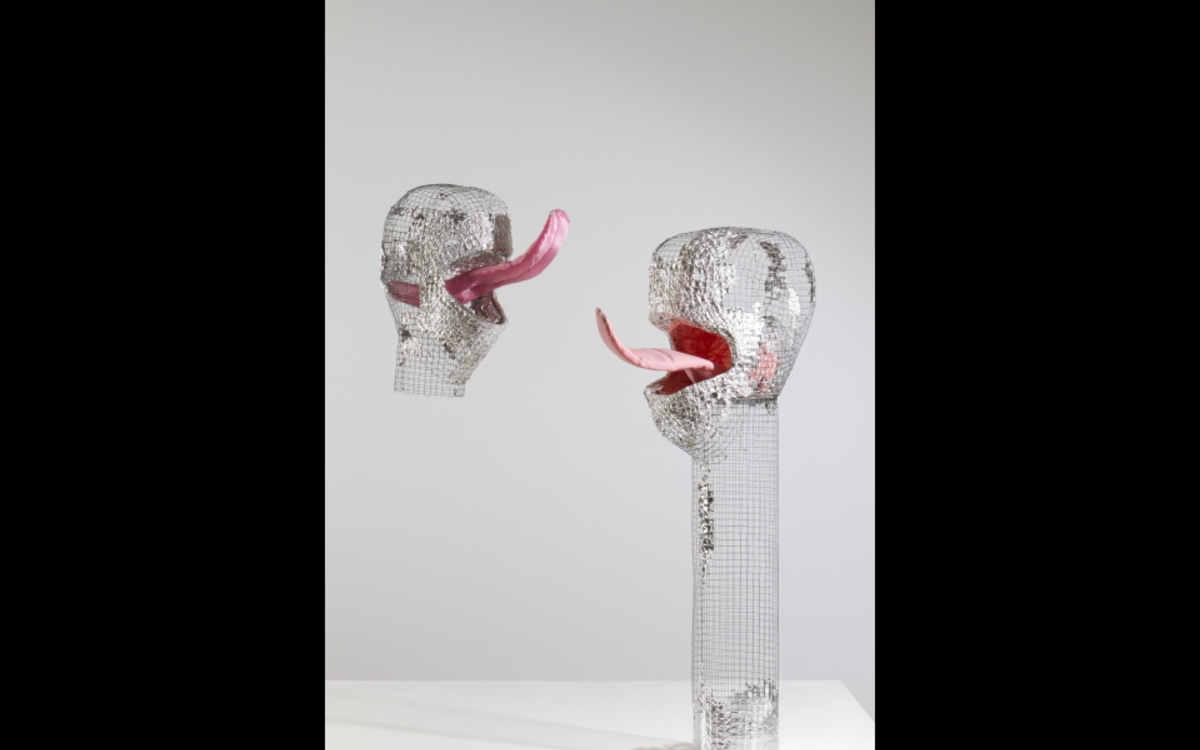
The exhibition ends with the presentation of a monumental installation and new productions by the contemporary visual artist and performer Kris Lemsalu, designed for the exhibition. The artist imagines an extravagant and burlesque universe populated by hybrid beings between human and non-human, embodying a contemporary reading of Estonian pantheism as much as a satirical vision of current society.